
Beneath the Race
Hellbender 100 — Part 3 of 3

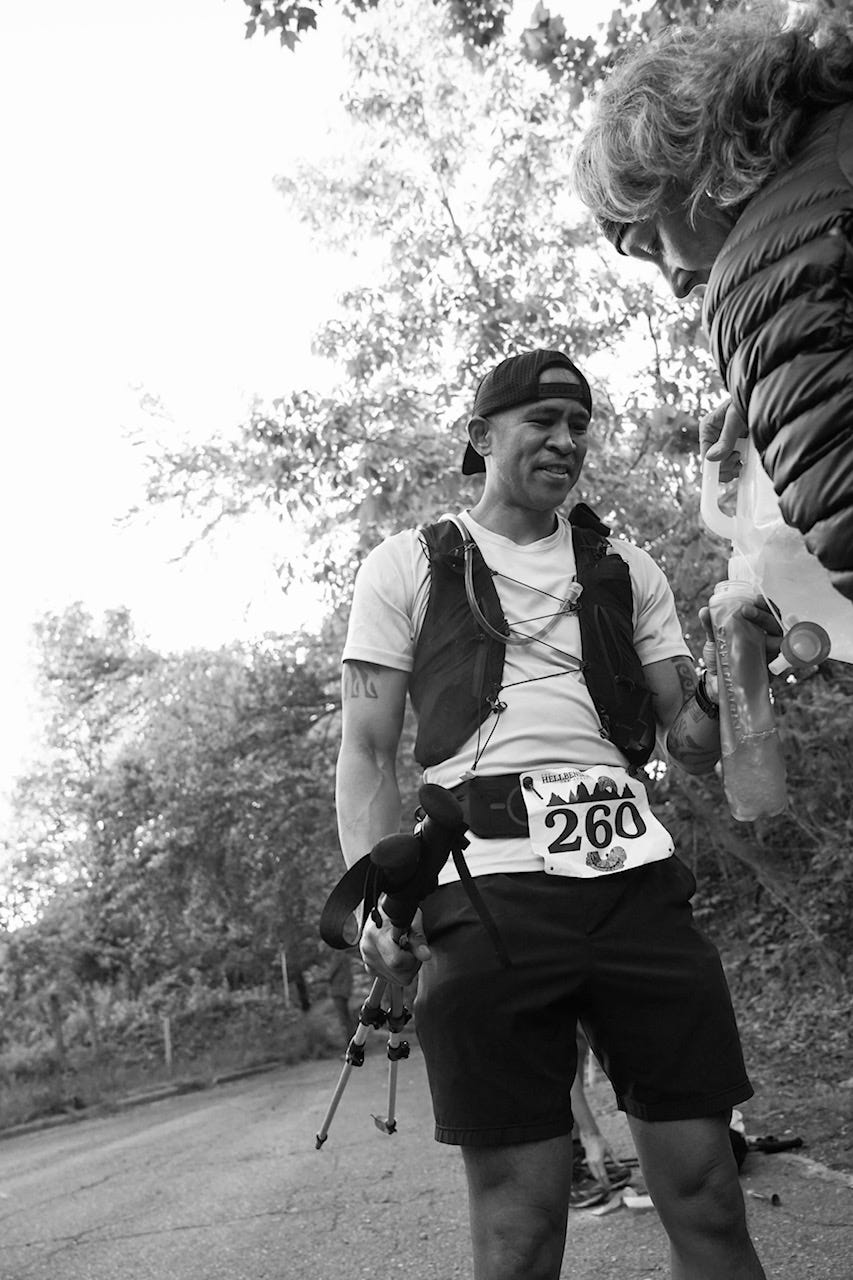
Pretending.
I do not want to pretend.
I have iterated on this piece for weeks. I’ve rewritten sections, rearranged ideas, cut paragraphs, added new ones, and tried to curate it just right. Perhaps that should not be surprising. The race is not the only thing I have been thinking about lately. Then my editor, my wife, gave me some difficult feedback.
She was right.
Her feedback exposed the very thing I have been trying to write about.
Pretending.
Not outright dishonesty. Something more subtle. Managing perception. Curating an image. Presenting the version of ourselves we most want others to see.
Her feedback exposed the very thing I had been trying to write about.
I could not miss the irony. Here I was, carefully editing an essay about honesty.
The more I sat with that realization, the more uncomfortable it became.
Because yes, Hellbender taught me about dependence. It taught me about grace. It taught me about God’s provision through people and the beauty of His creation. All of that is true.
But beneath all of it is a question I cannot seem to shake.
At what point do we become so good at pretending that we begin believing our own hype?
There is something lonely about that.
People occasionally ask me about Hellbender. Usually the question is some version of, “How was it?” My answer is almost always the same.
“It was really hard.”
The answer is true.
The mountains were hard. The darkness was hard. The sleep deprivation was hard. The uncertainty was hard. The race demanded something from me, and I paid for every mile.
But months later, the answer feels incomplete.
When I think about Hellbender now, I do not think first about the climbs, the descents, or the finish line. I think about an aid station.
That probably sounds strange.
After all, aid stations are not the point of the race. Nobody signs up for a hundred-mile ultramarathon because they are excited about folding chairs, cups of broth, and volunteers filling water bottles.
Yet that is where my mind keeps returning.
You arrive exhausted, hungry, dirty, discouraged, and uncertain. Sometimes you’re limping. Sometimes you’re questioning whether you can continue. Sometimes you’ve already convinced yourself that you’re finished.
Yet nobody seems surprised by your condition.
Nobody expects a polished version of you. Nobody asks you to perform. Nobody asks you to justify your need. Nobody compares your struggle to someone else’s. Nobody questions whether you are tired enough to deserve help.
Someone fills your bottles. Someone hands you food. Someone pulls up a chair. Someone offers encouragement. Someone prays. Then they send you back onto the trail.
What stays with me is how ordinary it all seemed.
Need was expected.
Nobody appeared embarrassed by it. Nobody seemed surprised by it.
In fact, the entire aid station existed because everyone understood the same thing: sooner or later, every runner would arrive needing something.
Food. Water. Rest. Encouragement. Prayer. A conversation.
The aid station existed for a reason. Not because some runners were weak. Because the course was hard.
The race director did not place aid stations along the route as an optional feature for those who could not handle the challenge. They were built into the course from the beginning because everyone understood what the terrain would eventually require of every runner.
The aid station is not the destination. It exists because the journey continues. Its purpose is not to remove hardship, but to sustain people through it.
The more I think about that, the more I wonder if we misunderstand our own need.
We often treat need as a personal failure. As evidence that something has gone wrong. As proof that we should be stronger, more mature, more capable, or further along than we are. We explain it away. We minimize it. We hide it. We apologize for it. We convince ourselves that someone else has it worse and that we should be able to carry our own load.
The aid station asked for none of that. It simply acknowledged what was true. And it was met with kindness. That is the part I cannot stop thinking about.
Not because it happened during a race, but because it feels so different from the rest of life. The longer I think about it, the harder it is to ignore.
Why did it feel easier to be honest there than in so many other places in my life?
At first, I thought that question was about church. Now I am not so sure. I think it might be about me.
I have spent much of my life learning how to navigate expectations. Some came from others. Many came from myself.
Over time, I learned how to present the competent version. The dependable version. The version that seemed to have things under control.
None of it felt dishonest.
In many ways, it felt responsible.
Yet the older I get, the more I wonder how much energy it takes to maintain those versions. Not through outright dishonesty, but through something more subtle. Selective honesty. Enough transparency to appear authentic, but not enough to feel exposed.
I know that game because I have played it for years.
Perhaps loneliness is not always the absence of people.
Perhaps sometimes it is the distance between who we are and who we allow others to see.
Maybe that is why the aid station stays with me.
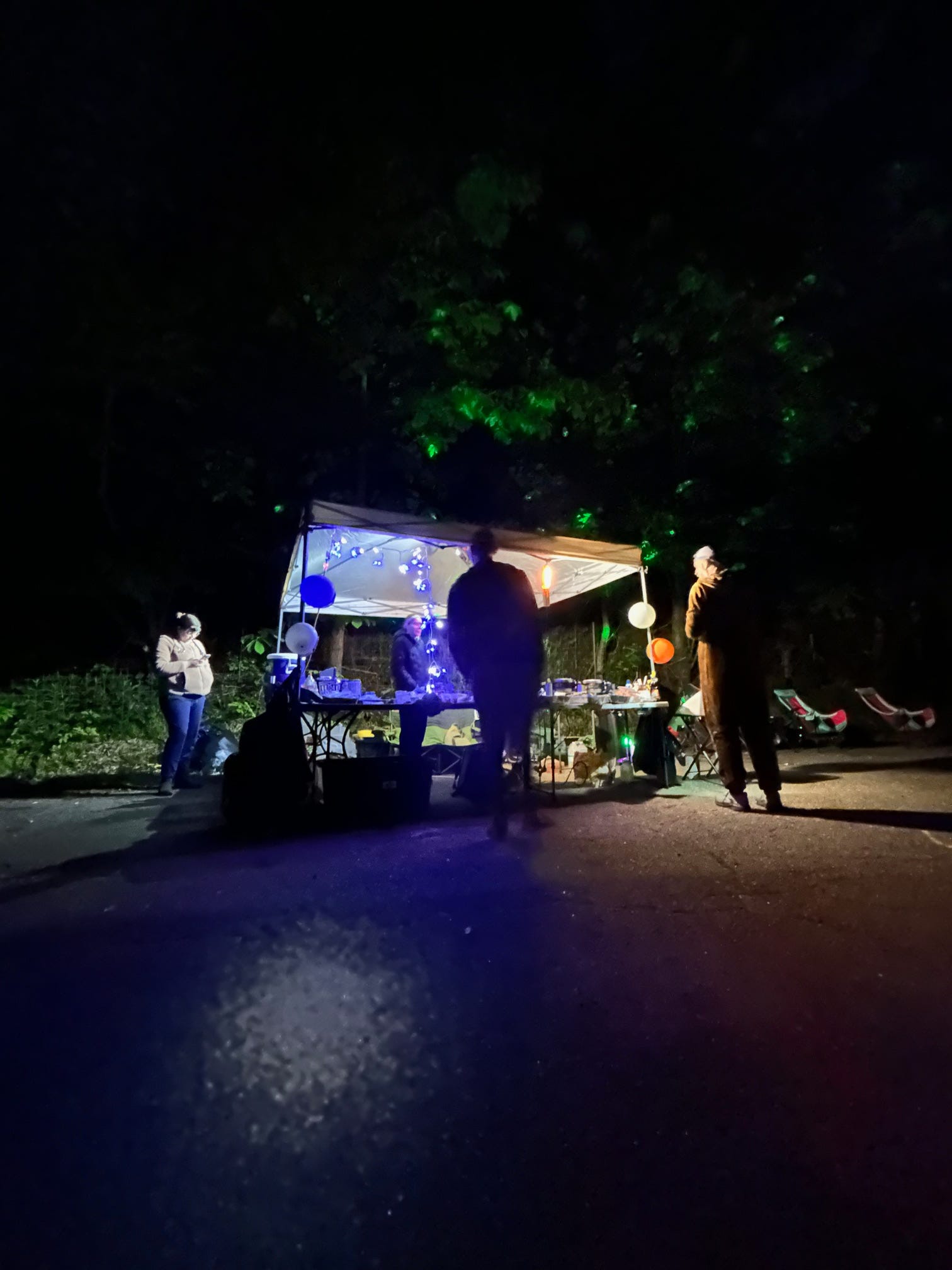
For a few brief minutes there was nothing left to manage. No image. No performance. No expectation to prove anything.
There was only reality.
And reality was enough.
As I write this, members of my family are walking through grief and tragedy of their own. Their stories have nothing to do with ultrarunning, mountains, or aid stations. Yet I cannot help but wonder how different they really are.
Different circumstances. Different wounds.
The same hiding. The same pretending. The same tendency to carry things alone.
And I find myself wondering whether they have an aid station.
Not a place.
A people.
People who expect need rather than question it. People who do not require them to prove they are hurting. People who do not compare their grief to someone else’s. People who understand that the purpose is not to remove hardship, but to sustain someone through it.
People who make reality safe enough to be spoken aloud.
Maybe that is why the image lingers.
Not because the race was extraordinary, but because what happened there exposed something so ordinary and universal. And because the aid station reflected something I rarely see in the rest of life: a community organized around the assumption that people will eventually need help.
After all this reflection, I find myself tired.
Not tired from the race.
Tired from thinking about it.
The thoughts themselves, and the countless iterations of them, have felt like an ultra of their own.
I thought I was writing about a race.
Instead, I found myself staring at questions I still cannot answer.
Why do we hide?
Why do we pretend?
Why can being known feel so risky?
And why, despite being surrounded by people who love us, does loneliness still find a way in?
That is what I am left with.
It is tiring.
And it is lonely.
I am surrounded by people who love me.
Yet there it is.
Perhaps that is why I want to return.
Not because the mountains have answers.
But because they have a way of exposing the questions we spend the rest of our lives trying not to ask.
Soli Deo Gloria.